

In many industrial companies, summer involves a temporary reduction in activity, a lower operational workload or a planned production shutdown.
Far from being an unproductive period, summer can become a decisive time for the company’s productivity.
Taking advantage of the summer to inspect your machinery allows you to observe the performance of your systems more accurately and anticipate problems that could affect productivity in the following months. It also makes it possible to detect issues that may have gone unnoticed during daily production due to the high operational workload.
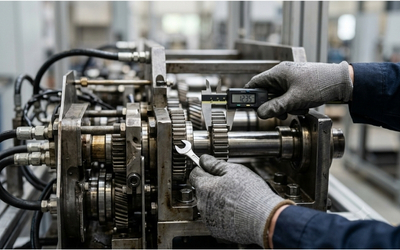
1. Detect warning signs before they lead to downtime
A machine may continue to operate while no longer working under optimal conditions.
Some signs that the equipment may require an inspection include:
- Loss of precision.
- Increased adjustment times.
- The appearance of vibrations.
- Recurring failures.
- Reduced stability during the process.
- Difficulty sourcing certain spare parts.
During periods of high production demand, these signs can become normalised until they eventually lead to a more serious issue. Analysing them during the summer makes it possible to identify potential critical points and take action before a minor deviation results in unplanned downtime.
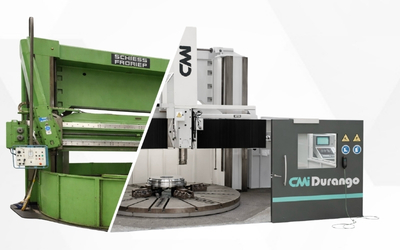
2. Assess the overall condition of the machinery
An inspection should not be limited to checking whether the machine is operating. It is also important to assess how it is operating and whether it continues to meet current production requirements.
To obtain a complete overview, several key aspects should be reviewed:
- The condition of the mechanical and electrical components.
- The precision and stability of the equipment.
- The operation of the control and automation systems.
- The availability of spare parts.
- Downtime, preparation and adjustment times.
- The safety and reliability of the process.
- The machine’s suitability for current production requirements.
This analysis makes it possible to identify what is really limiting performance and determine whether a specific intervention or a broader improvement is required.
3. Plan improvements in advance
Summer also provides more time to assess and plan the necessary actions without the usual production pressure.
Depending on the diagnosis, the solution may involve:
- A repair.
- The replacement of certain components.
- A control system upgrade.
- The incorporation of new automation systems.
- A complete Retrofitting project.
Not every machine needs to be replaced. In many cases, a well-planned modernisation can restore precision, improve reliability, reduce downtime and adapt the equipment to new production requirements.
The key is to assess each machine individually and determine which investment can offer the greatest return in relation to the remaining service life of the equipment.
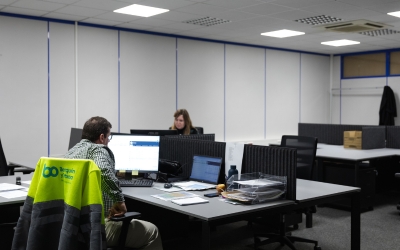
4. Prepare for the return to the usual production pace
The return to production does not begin on the first day of activity. It starts beforehand, by inspecting the equipment, anticipating potential needs and planning the necessary interventions.
Carrying out this analysis during the summer makes it possible to approach the following months with machinery that is more stable, reliable and prepared to meet the expected production levels.
Would you like to assess the condition of your machinery? Contact our team and we will analyse your case.