

After a period of reduced activity, a scheduled shutdown or a temporary decrease in operational workload, returning to production should not simply begin by switching the machines back on.
Before returning to the usual production pace, it is important to check that the equipment is ready to handle the expected workload, maintain the required precision and operate steadily over the following months.
A preliminary inspection makes it possible to detect potential deviations, carry out the necessary adjustments and prevent a minor issue from causing delays or unplanned downtime just as activity begins to increase again.
These are the three key points you should check before returning to production.
1. The mechanical and electrical condition of the machine
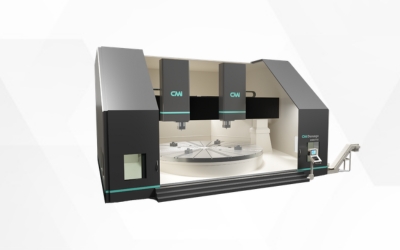
The first step is to check the general condition of the main mechanical and electrical components.
Even if the machine has remained idle or has operated under a lower workload, certain elements may show wear, insufficient lubrication, excessive play or minor anomalies that could affect its performance when it returns to full production.
Before resuming activity, it is advisable to check:
- The condition of the mechanical and electrical components.
- The lubrication and cooling systems.
- The connections, wiring and electrical panels.
- The appearance of unusual noises or vibrations.
- The operation of auxiliary systems.
- The condition of the safety elements.
Checking these aspects makes it possible to identify potential critical points before the machine is once again subjected to greater production demands.
2. Precision, stability and control systems
A machine may be operating while failing to provide the precision or stability required by the production process.
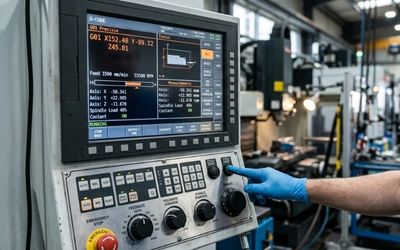
For this reason, before returning to production, it is also necessary to check how the equipment performs during operation. Longer adjustment times, deviations, loss of precision or reduced stability can affect both the quality of the parts and the overall production performance.
It is important to check:
- The precision and repeatability of the machine.
- Stability during the process.
- The response of the control systems.
- The operation of the measurement systems.
- The automation systems.
- Preparation and adjustment times.
This inspection makes it possible to determine whether a set-up is sufficient or whether the equipment requires a repair, a control system upgrade or a broader intervention.
3. Outstanding issues and response capacity
During periods of high operational workload, some minor issues may be postponed to avoid interrupting production.
However, the return to production should not begin without reviewing recurring failures, pending adjustments or difficulties that were already affecting the equipment’s operation.
Before returning to the usual pace, it is advisable to check:
- Whether there are any outstanding issues that have not yet been resolved.
- Whether the required spare parts are available.
- Whether certain failures have occurred repeatedly.
- Whether the machine meets current production requirements.
- Whether improvements or new systems need to be incorporated.
- Whether the equipment can maintain the expected performance.
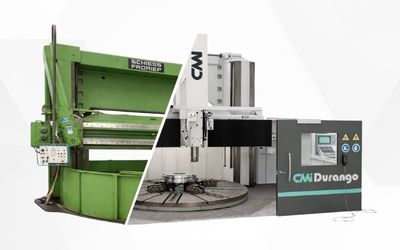
In some cases, a specific repair will be sufficient. In others, it may be necessary to replace components, upgrade the control system, incorporate automation or consider a Retrofitting project.
A more stable and reliable return to production
Preparing the machinery in advance makes it possible to return to production with equipment that is more reliable, precise and suited to current production requirements.
At CMI Durango, we analyse the condition of each machine to identify potential areas for improvement and define the most appropriate action for each production environment.
Is your machinery ready for the return? Contact our team and we will analyse your case.