
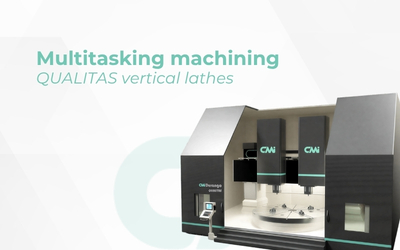
Multitasking machining: what it offers and when it makes sense
When machining complex parts, a single component may require different operations before it is finished. Turning, milling, drilling, tapping or grinding can all form part of the same production process.
When each of these operations is carried out on different machines, additional intermediate stages also appear: moving the part, repositioning it, preparing the next machine and repeating the process as many times as necessary.
Multitasking machining offers a different way of working: concentrating different operations in a single machine to simplify the process and reduce intermediate steps.
What does multitasking machining really mean?
We are talking about machines capable of integrating different machining operations within a single piece of equipment.
Their value lies not only in having a more versatile machine, but in being able to organise the production process in a more concentrated way, reducing machine changes and making better use of the available resources.
At CMI Durango, this concept is embodied in our range of QUALITAS multitasking vertical lathes.
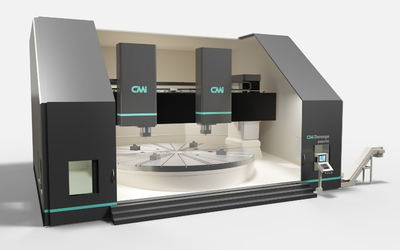
Five operations in a single machine
Five operations in a single machine
Turning · Milling · Drilling · Tapping · Grinding
This makes it possible to carry out different stages of machining on the same part without necessarily having to use a different machine for each operation.
For parts that require several processes, especially when dealing with complex or large formats, reducing machine changes can considerably simplify the operation.
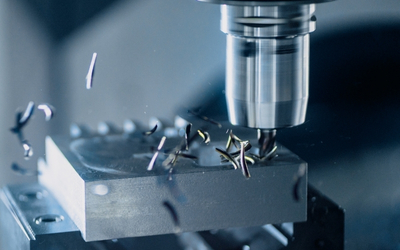
What does integrating different operations bring?
Multitasking machining makes it possible to improve several aspects of the production process at the same time.
- Less unproductive time
Every machine change involves time for moving, preparing and repositioning the part.
Concentrating different operations in a single machine helps reduce some of these intermediate times and keeps the process more continuous.
- Fewer setups and repositioning operations
When a part moves between different machines, each new operation may require a new clamping process and a new setup.
Reducing these changes helps simplify the process and minimise the interventions required between one operation and the next.
- Better use of shop floor space
Integrating different machining capabilities into a single machine can also reduce the need for separate equipment for each stage of the process.
This can help optimise the available shop floor space and concentrate production capabilities.
- A more concentrated process
Turning, milling, drilling, tapping and grinding can all form part of the same machining sequence.
The advantage is not simply having more functions available, but being able to combine them within the same process and reduce intermediate stages.
When does a multitasking vertical lathe make sense?
Not every process requires a multitasking solution.
This type of machine is especially useful when a part requires different operations and the aim is to reduce movements, setups and changes between machines.
This type of machine is especially useful when:
- the part requires several machining operations;
- its size or weight means that each additional handling operation requires more time and resources;
- the aim is to reduce intermediate stages;
- available shop floor space is an important factor;
- different machining capabilities need to be concentrated in a single solution.
The key, therefore, is to analyse the part, the operations required and the most efficient way to organise its machining process.
QUALITAS S, M and L: a single solution for different needs
Within our range of QUALITAS multitasking vertical lathes, we offer three configurations designed to adapt to different formats and machining requirements.
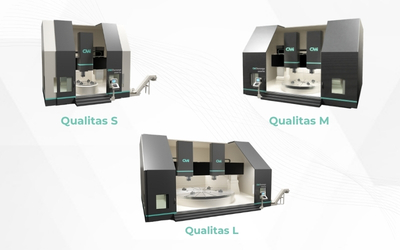
You can explore all the features of the QUALITAS range or discover the rest of our machining solutions.
Do you have any questions or would you like more information? Contact us