
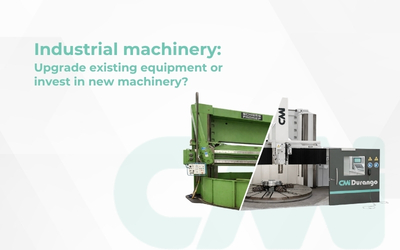
In the industrial sector, machinery plays a key role in production performance. Milling machines, lathes, machining centres, CNC machines, automated production lines and specialised machinery are all part of day-to-day operations at many companies that require precision, continuity and efficiency.
But even the most robust equipment has a life cycle. Over time, clear signs may become apparent: a loss of accuracy, more frequent breakdowns, outdated controls, obsolete components, reduced performance or difficulty in adapting to new production requirements.
And then the usual question arises: is it better to upgrade existing machinery or invest in new equipment?
The answer is not always immediate. It depends on the actual condition of the equipment, the manufacturing process, the production targets and the technical scope for improvement.
When upgrading may be the best option
It is not always necessary to replace a machine. In many cases, the equipment is still in good mechanical condition but needs upgrading to continue operating efficiently.
This is where Retrofitting comes into play: a solution that enables the modernisation of existing industrial machinery by incorporating improvements to control systems, automation, safety, components or performance.
Upgrading a machine can be a good option when:
- The mechanical structure remains in good condition.
- The control system, or CNC, needs upgrading.
- The machine has lost its accuracy, but it can regain it.
- Equipment from different manufacturers
- The aim is to improve the security of the equipment.
- The process needs to be more efficient, better connected or more automated.
In such cases, modernisation allows companies to make the most of their existing machinery and adapt it to current production needs.
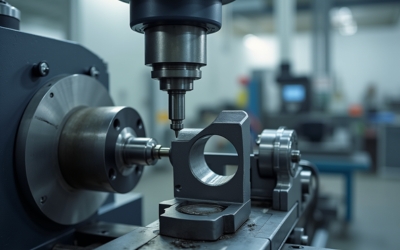
When a new machine can be more efficient
However, upgrading is not always the best option. There are situations in which investing in a new industrial machine may yield better results in the long term.
This can happen when the existing equipment severely restricts production, when the structure is in a state of disrepair, or when the process requirements have changed completely.
A new machine may be the best option if:
- The current machinery no longer offers sufficient guarantees.
- The cost of the upgrade is not technically worthwhile.
- New machining or production capabilities are required.
- Production requires greater speed, precision or automation.
- Maintenance costs are rising all the time.
- The team is unable to adapt to the new industrial objectives.
In such cases, a new solution can help to improve productivity, reduce incidents and better address the current challenges facing the production environment.
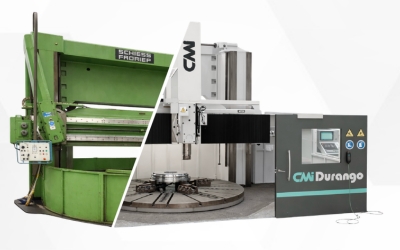
The key lies in technical analysis
The decision should not be based solely on the age of the machine. A machine that has been in use for years may still have plenty of life left in it if it is properly assessed.
That is why, before deciding whether to upgrade industrial machinery, carry out a retrofitting project or invest in a new machine, it is essential to carry out a technical assessment.
At CMI Durango, every project begins with an analysis of the machine’s initial condition, its components, performance, safety, the production environment and the client’s specific requirements.
This analysis enables us to identify the most suitable option: a partial upgrade, a full retrofit, a new machine or a combined solution.
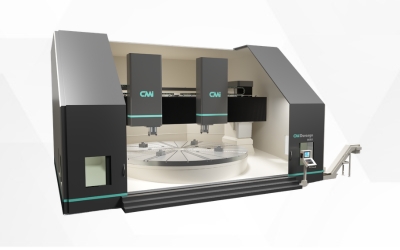
Improving production starts with making the right decisions
In the machine tool and industrial machinery sector, every technical decision has a direct impact on production efficiency, precision and continuity.
That is why, before replacing a piece of equipment, it is worth analysing what real potential for improvement it offers. And before upgrading it, it is also necessary to assess whether that upgrade will be cost-effective in the long term.
Upgrading or investing in new machinery should not be an automatic decision, but one based on technical criteria.
Because in industry, making the right choice doesn’t mean doing more. It means doing what each production process actually needs.
If you have any questions and aren’t sure which option is best for you, give us a call and we’ll help you